

2026 Gun Dealer Responsibility Social Media Toolkit
This toolkit provides guidance and resources on how to educate others via social media about the problem of gun trafficking and the important role gun dealers play in stemming the flow of illegal guns and reducing gun trafficking.
Backgrounder
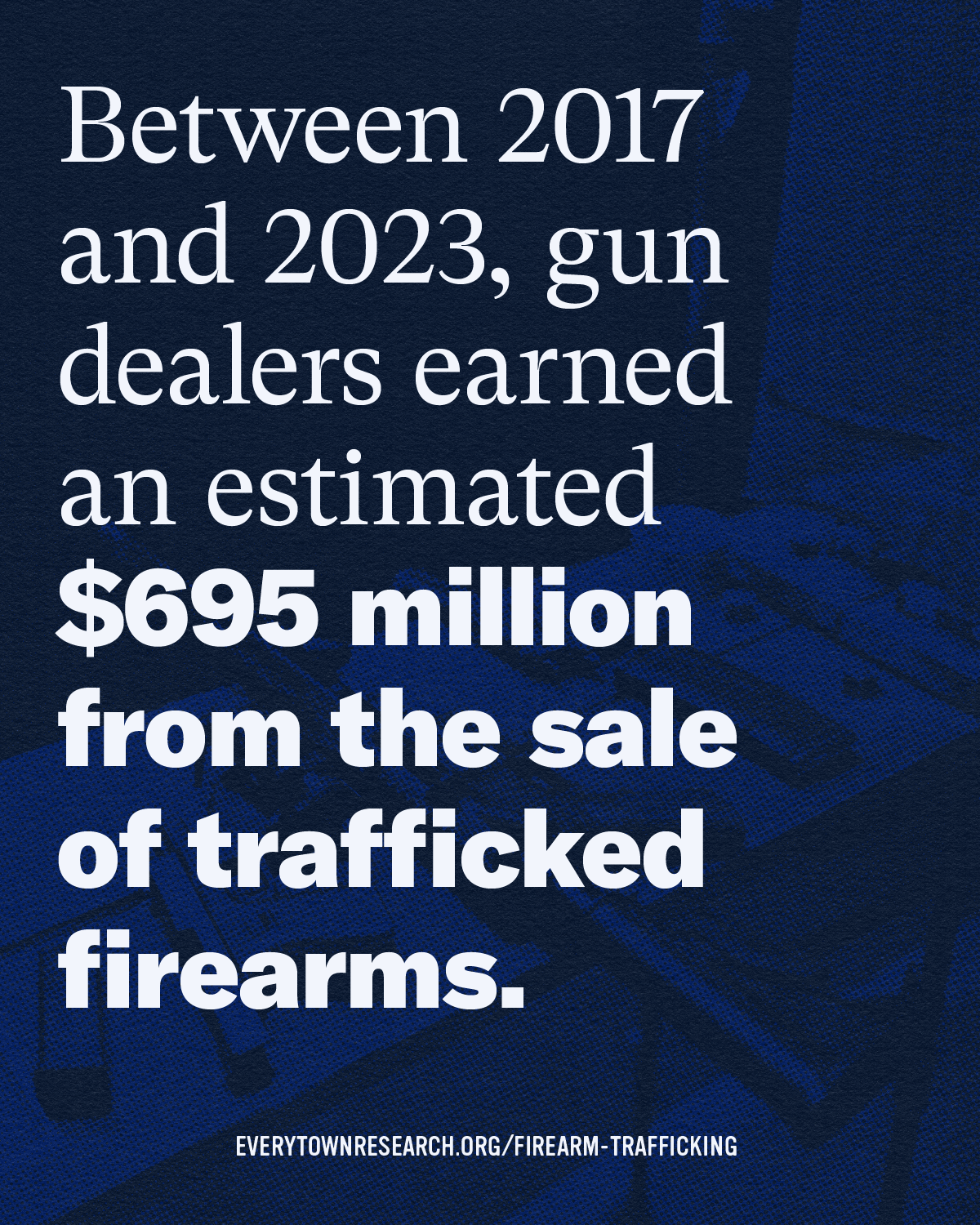
Hundreds of thousands of guns are illegally trafficked into communities, where they are used in shootings and other violent crimes that terrorize neighborhoods. It’s not just individual traffickers who are the problem. Irresponsible gun dealers who fail to secure their supply chains or pay attention to signs of trafficking are also responsible for this crisis. The gun industry is a key actor in the illegal movement of guns and it profits substantially from it. Between 2017 and 2023, gun dealers raked in an estimated $695 million from the sale of trafficked firearms.
The vast majority of trafficked guns begin as part of the inventory of a licensed gun dealer. Straw purchasing and unlicensed dealing, which both involve illegal sales from a licensed gun dealer, account for more than half of all trafficked firearms. Another top trafficking method involves thefts from gun dealers. When dealers fail to recognize the telltale signs of suspicious sales and fail to adequately secure their inventory, they become suppliers of trafficked guns—and end up prioritizing their profits over our safety. Gun dealers have a tremendous responsibility—and opportunity—to take meaningful steps to prevent gun trafficking at the source.
How to help hold gun dealers responsible on social media
- Tag Everytown in all of your social media posts so our national account can amplify your message. Our handles are:
- Instagram: @everytown
- Threads: @everytown
- Bluesky: @everytown.org
- TikTok: @everytownofficial
- Facebook: @Everytown for Gun Safety
- Use data from our report The Supply Side of Violence: How Gun Dealers Fuel Firearm Trafficking to draft original social media posts.
- Share these Gun Dealer Responsibility assets on social media to educate others about the role gun dealers are playing in the problem of firearms trafficking in America. Find sample social media posts below.
- Record a video no longer than 90 seconds about the role gun dealers are playing in the firearms trafficking problem in America and share it on social media.
- When filming videos, remember to:
- Center subjects in the middle of the frame
- Film in a bright, evenly-lit space
- Use a tiny mic or record in an environment with little background noise
- More helpful tips for recording videos
Sample social posts
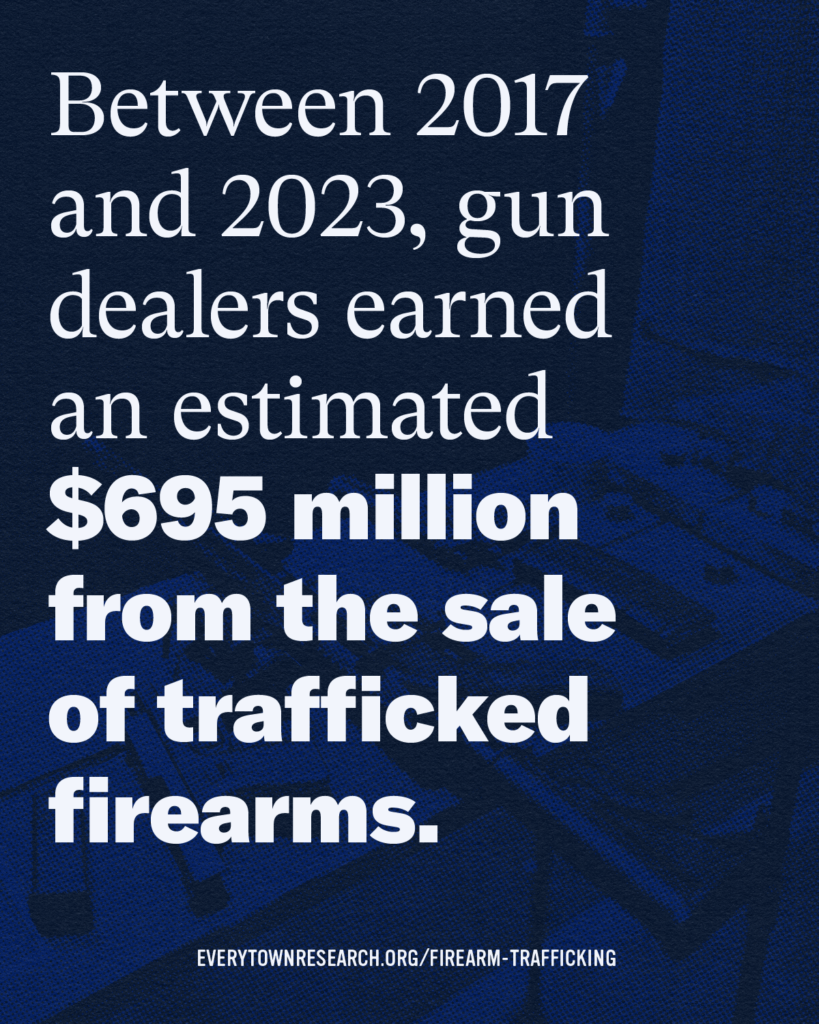
Trafficked firearms are big business—and gun dealers are the beneficiaries.
Profits should never come before public safety. Gun dealers must do more to stop firearms from falling into the wrong hands.
Learn more from @Everytown: everytownresearch.org/firearm-trafficking
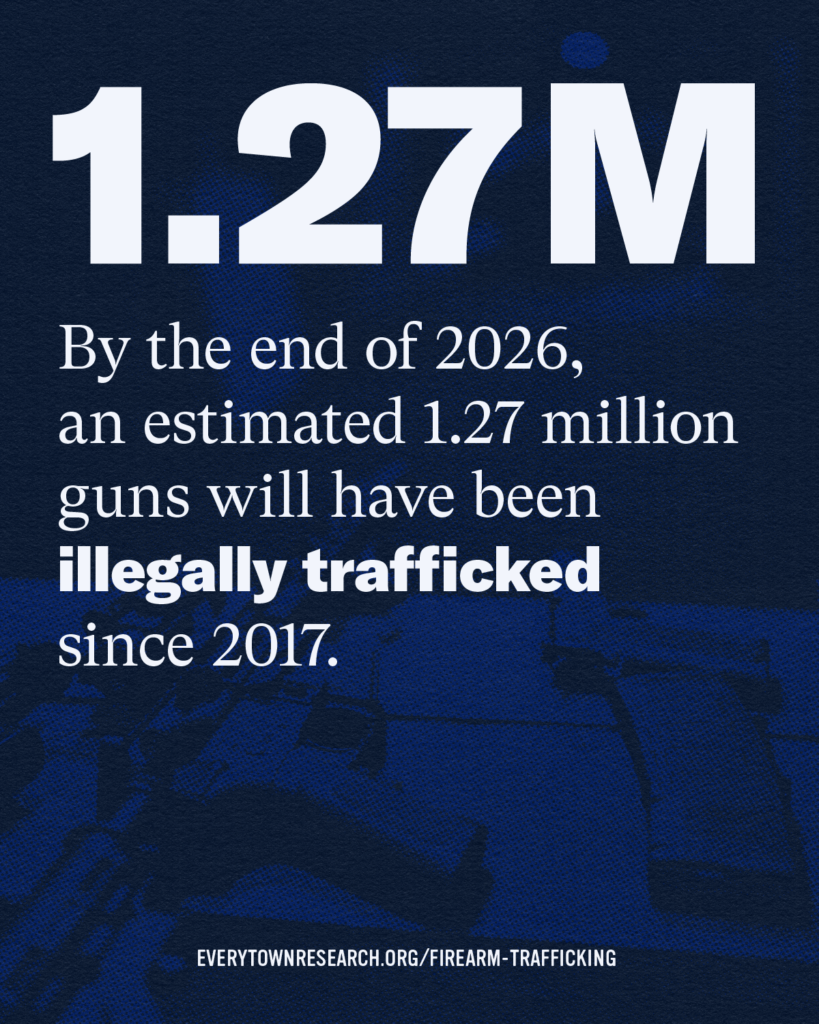
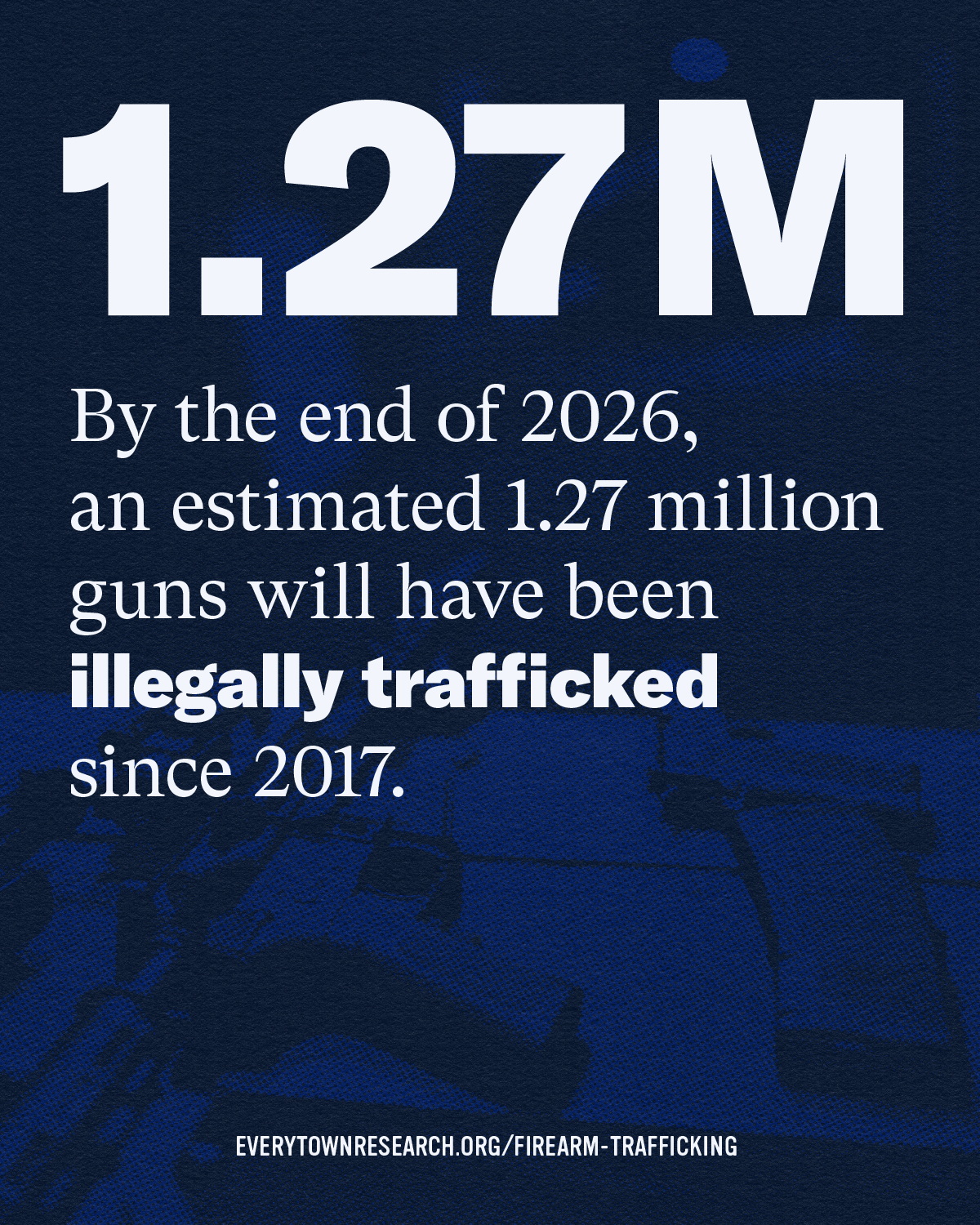
Gun trafficking is a huge problem and leads to hundreds of thousands of illegal guns being channeled into communities around the country. These guns are often used in violent crimes.
Learn more from @Everytown about how gun dealers can help stem the tide of gun trafficking: everytownresearch.org/firearm-trafficking
Every day, nearly 130 people in the US are killed with guns and more than 200 are shot and wounded. Gun trafficking is fueling this epidemic by allowing guns to fall into the wrong hands.
Learn more from @Everytown about gun dealers’ role in this problem and what can be done: everytownresearch.org/firearm-trafficking

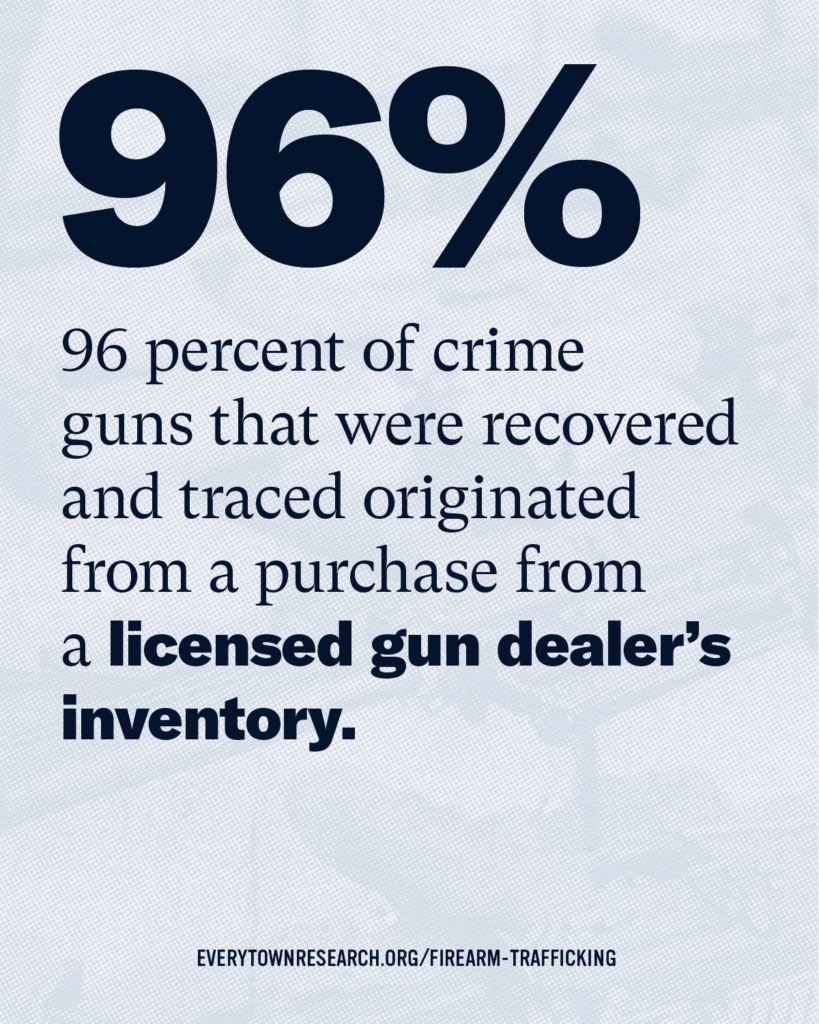
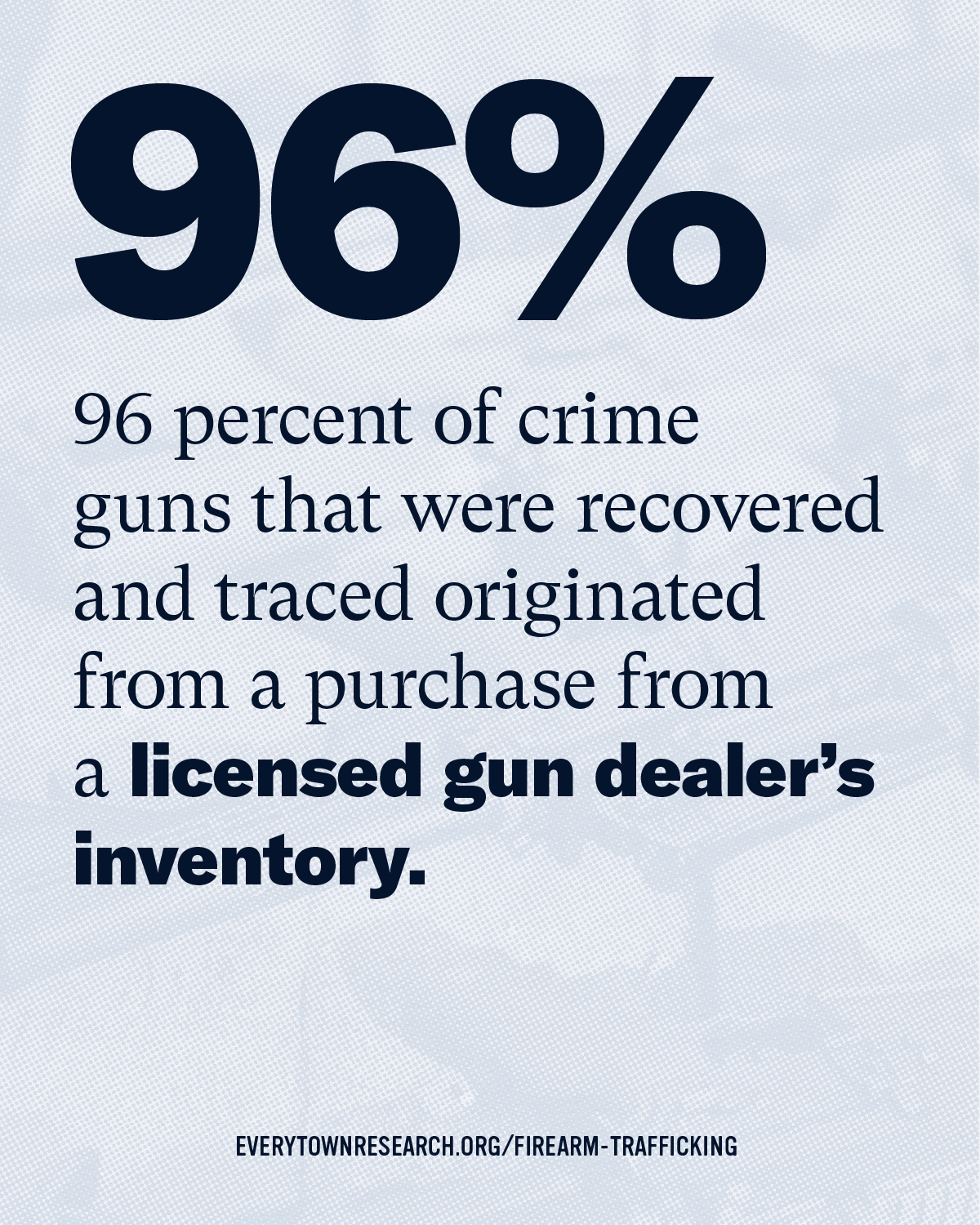
Nearly all guns used in crimes originated from a licensed gun dealer—a statistic we simply cannot ignore.
Learn more from @Everytown about the steps gun dealers can take to help keep guns from being used in crimes: everytownresearch.org/firearm-trafficking
The vast majority of trafficked guns first come from licensed gun dealers. These guns are often used in violent crimes.
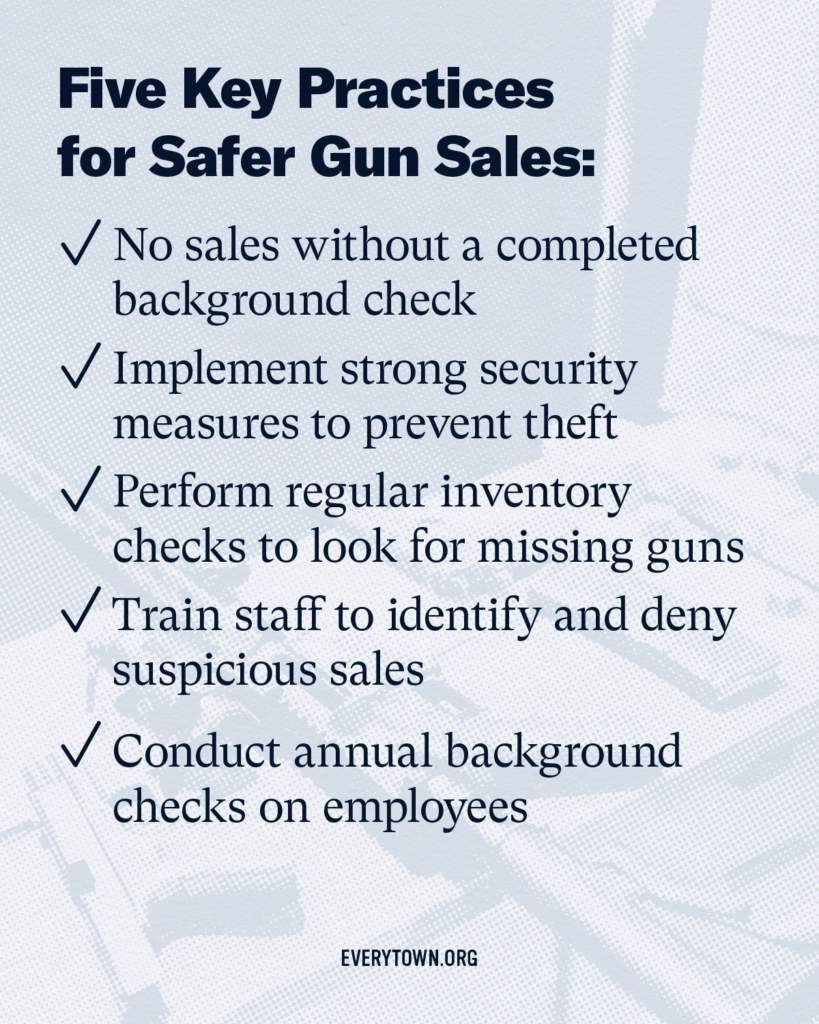
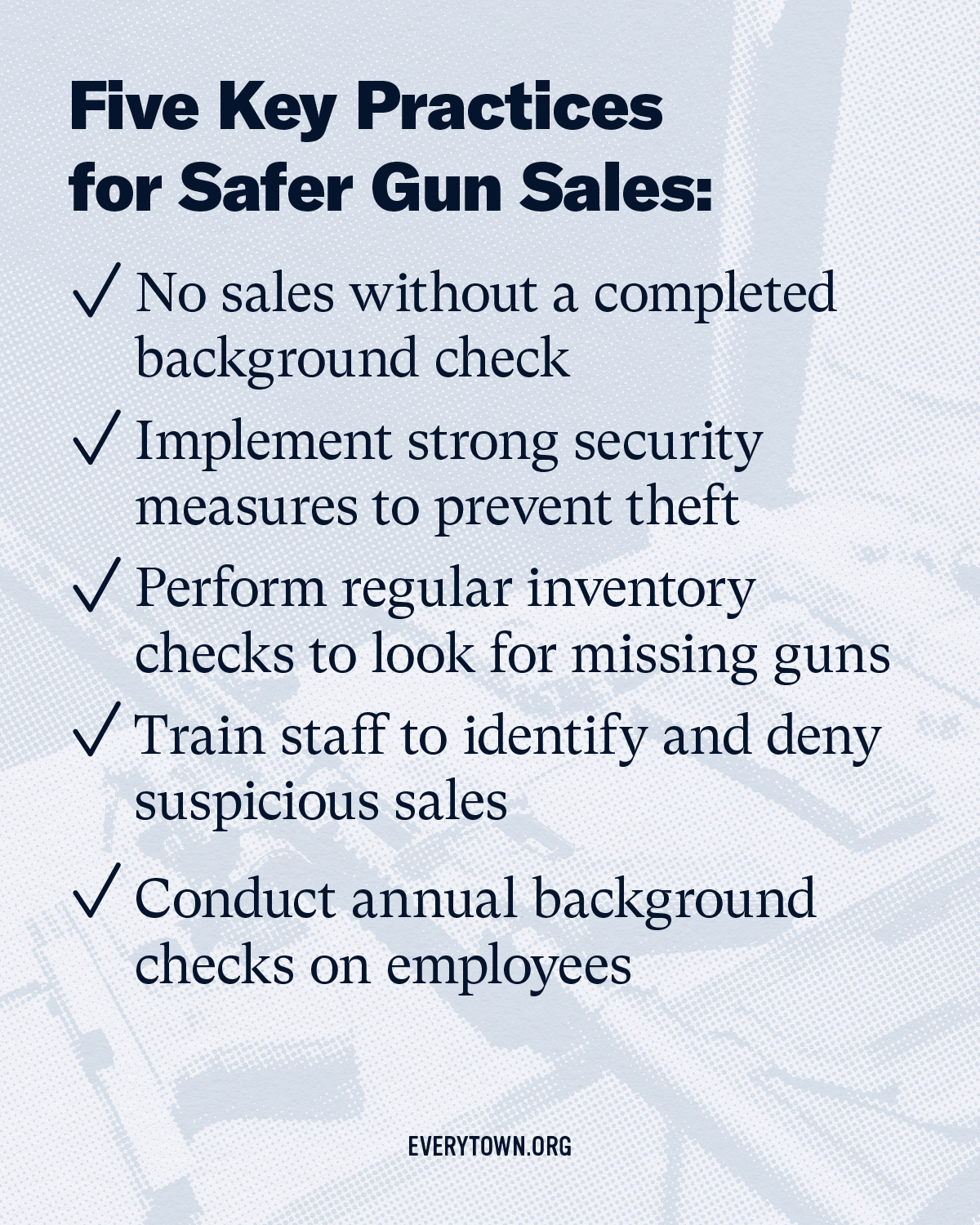
The good news: Gun dealers who want to be part of keeping their communities safe can adopt these five practices. Learn more from @Everytown: everytownresearch.org/firearm-trafficking
Video idea
Record an educational video to share on social media using this messaging:
- Everytown released a report in 2025 analyzing the problem of gun trafficking—including its prevalence, the primary trafficking methods and channels used, the role of gun dealers in enabling trafficking, and the profits earned by the gun industry from trafficked guns.
- What they found was truly alarming.
- By the end of 2026, Everytown estimates that 1.27 million guns will have been illegally trafficked since 2017.
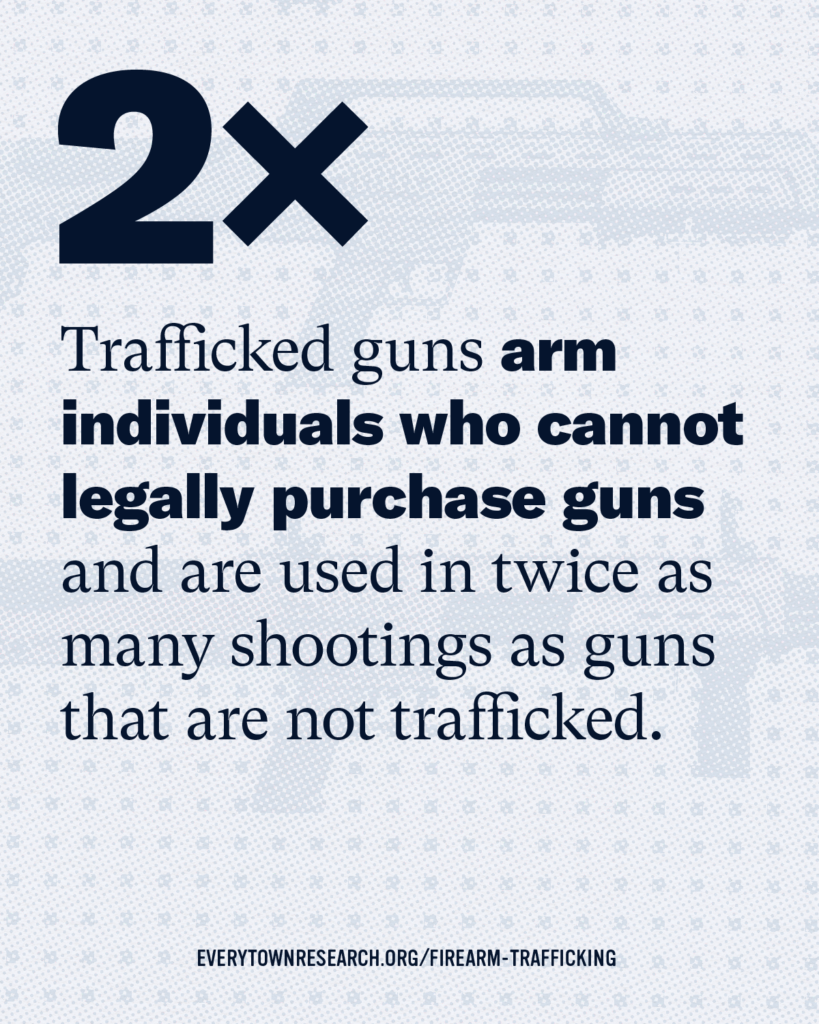
- Trafficked guns are used to arm individuals who cannot legally purchase guns and are used in twice as many shootings as guns that are not trafficked.
- The vast majority of guns that end up trafficked begin as part of the inventory of a licensed gun dealer.
- Between 2017 and 2023, gun dealers earned approximately $695 million from sales of trafficked firearms.
- The good news: Gun dealers who want to be part of keeping their communities safe can adopt these five practices:
- No sales without a completed background check
- Implement strong security measures to prevent theft
- Perform regular inventory checks to look for missing guns
- Train staff to identify and deny suspicious sales
- Conduct annual background checks on employees
- Follow @Everytown for more about how gun dealers can help keep guns out of the wrong hands.
Best practices for recording a vertical video
- Wipe your camera lens
- Try to keep your video to 90 seconds or less
- Record with your camera vertically positioned, how you hold your phone 🤳🏻
- Try to avoid being too close to the camera. The video will be cut vertically for social media so try to have as much negative space around you as possible.
- Make sure you are facing a window or light source instead of having it backlit behind you. We want to see your beautiful face!
- Avoid filming in front of distracting backgrounds (anything with lots of words/writing on them, areas where there’s lots of people or movement)
- Try to film in a quiet area. Wind, shouting, or car/street noises can all be very distracting. Turn off AC, fan, or any machine with a humming noise. Avoid filming near the kitchen and refrigerator. If you’re not sure, film a test take and then listen to it.
- If you have a microphone attachment for your phone, please use it.
- If you are working with a script try recording a sentence at a time: record a sentence-take a pause- review next sentence- and record again.
- On a lot of cameras and computers, you can select your video record settings. If so we would recommend filming at 4k resolution at 24 fps (frames per second).
- If you are using your phone, ideally you can have someone film you (your front-facing camera is better) or rest your phone/tablet/laptop on something while you record so that the video is not shaky.
- It can also be helpful to rest it on top of a box or a stack of books so that it’s at eye-level with your face and you’re not looking down or up at too much of an angle.
- Please wear a red Moms Demand Action tee if you are a Moms volunteer, a Students Demand Action tee if you are a student, or an Everytown Survivor Network tee if you are a member of ESN. If you don’t have one, please wear solid-color clothing.