



The Supreme Court Ruled Against Hawai‘i’s No-Carry Default Rule in Wolford v. Lopez. Here’s What You Need To Know.
Wolford v. Lopez Decision Summary
On June 25, 2026, the Supreme Court struck down Hawai‘i’s no-carry default rule in a 6 to 3 decision in the Wolford v. Lopez Second Amendment case.
Keep reading for a short summary of the June 2026 decision in Wolford v. Lopez.
What was the big question in Wolford v. Lopez?
The question in Wolford was this: Can a state prohibit carrying firearms on others’ private property open to the public without the owners’ express permission?
What did the Supreme Court decide?
On June 25, 2026, in a 6 to 3 decision, the Supreme Court struck down Hawai‘i’s law that prohibited carrying firearms on others’ private property open to the public without the owners’ permission. In doing so, the Supreme Court has declared that a gun owner has the right to enter a business with a weapon unless told otherwise.
How the Justices voted
- Justice Samuel Alito delivered the opinion of the court
- Chief Justice John Roberts, Justice Clarence Thomas, Justice Neil Gorsuch, Justice Brett Kavanaugh, and Justice Amy Coney Barrett joined Alito in the majority opinion
- Justice Amy Coney Barrett filed a concurring opinion, joined by Justices Thomas and Gorsuch, as to Part II-B
- Justice Elena Kagan filed a dissenting opinion
- Justice Ketanji Brown Jackson filed a dissenting opinion, joined by Justice Sonia Sotomayor
Remind me: What was the Hawai‘i ‘no-carry’ default rule?
After the Supreme Court’s 2022 decision in New York State Rifle & Pistol Ass’n v. Bruen, Hawai‘i passed a law setting a common-sense default rule that prohibited firearms on private property open to the public without the owner’s express permission. So, until a property owner posted a sign allowing guns or said “yes, feel free to carry on my land,” the answer was “no.” This law ensured that public safety and property rights remained protected.
What does this change about Hawai‘i’s gun laws?
This flawed decision flips the script on common sense, turning any private property open to the public into a default carry zone. However, this case is only about the default rule for public-facing businesses.
Hawai‘i’s law still stands for private property that isn’t generally open to the public; nobody has the right to bring a gun into your home without your permission. And the decision does not touch sensitive places like schools or polling places, where the Supreme Court has already made clear that it is okay to ban guns.
Does this ruling mean that private businesses always have to permit guns on their private property?
No. Hawai‘i property owners still have complete authority over who brings guns onto their land. If you have a business, you can still stop your customers from bringing firearms onto your property, including by posting a sign at the door.
What can I do to support gun safety after this Supreme Court decision?
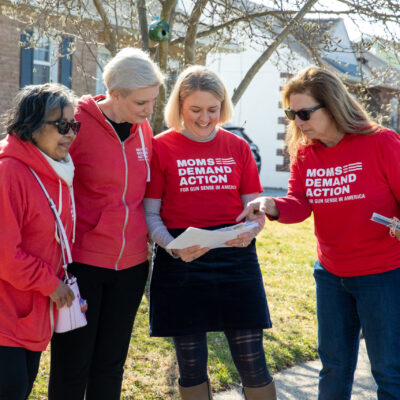
Everytown’s grassroots volunteer network is already working to promote public safety in the wake of the Wolford v. Lopez decision. Moms Demand Action and Students Demand Action volunteers are working to enhance community safety by implementing signage in businesses and on other private property that prohibits firearms.
Ready to join us? Click the button below to send a pre-populated email to [email protected] telling us you want to get involved in our signage campaign work.
The Latest

What You Need to Know About the Supreme Court and the Upcoming Assault Weapons Ban Case

What to Know About Wolford v. Lopez
How do guns enter the illegal market?
According to ATF research, the three leading methods of gun trafficking are straw purchasing, unlicensed dealing, and thefts from gun dealers.